
Advanced solutions for healthy hearing
Hearing Aid Technology
Hearing aid technology continues to advance, offering better hearing and improved quality of life. Many modern devices feature rechargeable batteries, high-quality streaming from smartphones and TVs, and Bluetooth® Low Energy for longer use. Apps let you adjust volume, check battery life, stream audio, switch programs, locate lost aids, manage tinnitus therapy sounds or settings, and access remote support.
Many high-quality hearing aids also use AI-powered sound processing to automatically adapt to different environments, enhancing speech while reducing background noise.
Types of Hearing Technology
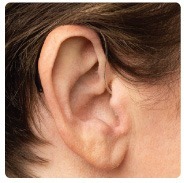
Receiver-in-the-Canal (RIC)
Receiver-in-the-Canal (RIC) hearing aids are a popular, discreet option that sit comfortably behind the ear, deliver sound through a nearly invisible wire, and come in a variety of colors to match your style. RIC hearing aids are intended for those with mild to severe hearing loss.
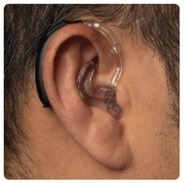
Behind-the-Ear (BTE)
For a more powerful hearing aid with greater amplification and a larger battery, a licensed hearing professional may recommend a behind-the-ear (BTE) hearing aid. Like RIC styles, a BTE is worn behind the ear and delivers sound through a discreet sound tube, and offers the same features and color options. Many BTEs can also offer customized earmolds to support richer audio and greater amplification with reduced feedback (whistling). BTE hearing aids can benefit a wide range of hearing loss, from mild to profound.
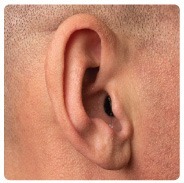
Custom Hearing Aids
Completely-in-Canal (CIC)
The smallest custom option, CIC hearing aids fit deep in the ear canal for a discreet look. They offer all-day comfort, long battery life, and weather resistance, and are generally suitable for mild to moderate hearing loss.
In-the-Canal (ITC)
The most popular custom style, ITC offers a small design with advanced features like wireless streaming, optional rechargeable batteries, and dual microphones (when ear size allows). Ideal for mild to severe hearing loss.
In-the-Ear (ITE)
The largest custom style, ITE provides full features, wireless connectivity, and longer rechargeable battery life. Best for mild to severe hearing loss, especially for those with dexterity challenges.
Implantable Technology
Implantable Technology
Implantable hearing devices include cochlear implants, osseointegrated (bone-anchored) devices, and middle ear implants.
Cochlear Implants
Cochlear implants help adults and children with severe to profound hearing loss who receive limited benefit from hearing aids. They bypass damaged inner-ear structures and send sound signals directly to the auditory nerve. Candidacy is determined by an ENT or hearing professional.
Osseointegrated Devices
Bone-anchored devices transmit sound through skull vibrations to the inner ear. They are typically used for conductive or mixed hearing loss and single-sided deafness. An ENT or hearing professional can assess candidacy.
Middle Ear Implants
Middle ear implants are an option for individuals who cannot use conventional hearing aids due to medical or anatomical reasons. An external processor sends sound to an implanted receiver, which stimulates the middle ear or cochlea to improve hearing. Candidacy requires evaluation by a specialist.